Origin, Process, and Cost per Carat
Lab-grown diamonds are real diamonds chemically and optically — they are grown from a carbon seed using either high-pressure high-temperature (HPHT) or chemical vapor deposition (CVD) processes. As of 2026, wholesale prices for lab-grown diamonds have fallen to roughly 10 to 20 percent of natural diamond prices, with a one-carat round brilliant typically costing 200 to 500 USD loose, depending on grade.
Moissanite is silicon carbide, originally discovered in meteorites and now almost exclusively grown in labs. Wholesale prices for a one-carat equivalent moissanite sit in the 30 to 80 USD range. Cubic zirconia is the most affordable, a zirconium dioxide stone that costs well under 1 USD per carat at wholesale even in higher grades such as 5A and 8-heart-8-arrow cuts. These three stones serve entirely different retail positions, and mixing them up in your catalog confuses customers.
Optical and Durability Differences
Diamond and moissanite are both extremely durable — diamond at 10 on the Mohs scale, moissanite at 9.25. CZ sits at 8 to 8.5, which is scratch-resistant but will dull noticeably after a few years of daily wear. For engagement rings and heirloom pieces meant to last a lifetime, lab diamonds or moissanite are the only responsible choices.
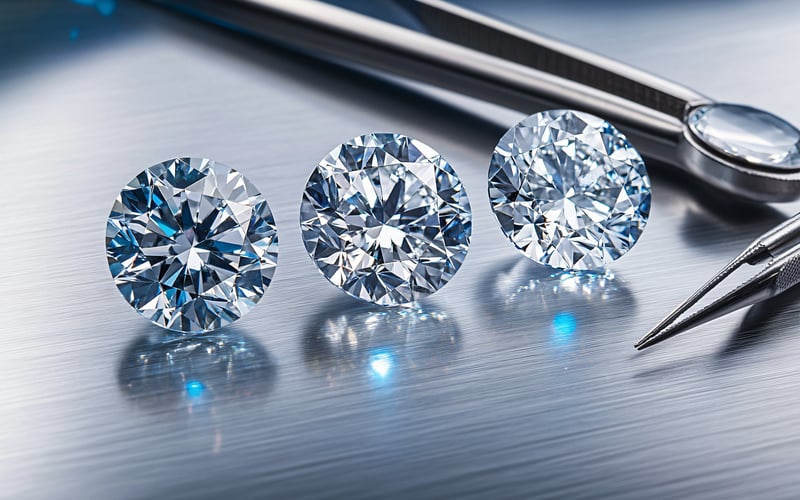
Optically, lab diamonds pass all standard diamond tests because they are diamond. Moissanite has higher refractive brilliance than diamond, which produces noticeably more rainbow fire — a look some customers love and others consider too flashy. CZ delivers bright sparkle when new but lacks the depth and fire of the other two, and can cloud with scratching over time. In side-by-side comparison, a trained eye distinguishes all three, but in isolation a high-quality 5A CZ or moissanite looks convincingly like diamond to most consumers.
Positioning by Retail Price Tier
For fine jewelry retailers targeting 500 USD and above, lab-grown diamonds have become the dominant center-stone choice, offering real-diamond properties with significantly better margins than natural stones. Transparent disclosure — both in product descriptions and on certificates — is now a buyer expectation, so insist on IGI or GIA grading reports from your supplier.
Moissanite anchors the 150 to 500 USD bridal alternative market and the demi-fine segment where customers want large visual impact at accessible prices. CZ is the workhorse of fashion jewelry, bridal look-alikes under 100 USD, and the entire pave side-stone category even in silver and lab-diamond pieces. A common and successful strategy is to use lab diamond or moissanite for center stones while using high-grade CZ for melee and pave — the cost savings are enormous and the visual trade-off is minimal.